Competitive Pokemon Abilities Guide: How Abilities Define Roles
The abilities that shape Gen 9 competitive teams, how to pick the right ability for each role, and which hidden abilities are worth chasing before you build.
Competitive Pokémon builders & analysts
The Metamons team builds the competitive team-builder and Pokédex behind this site. Our guides explain competitive team-building concepts using referenced Smogon, Pokémon Showdown, and game-mechanics resources. Rulesets, available Pokémon, and usage trends change, so always confirm current legality in your chosen format.
- strategy
- abilities
- team-building
- singles
- ou
An ability can double a Pokémon's Attack stat, make it immune to all passive damage, reflect status moves back at the user, or recover a third of its HP every time it switches out. Picking the wrong ability from the dropdown in a team builder is one of the easiest mistakes to make and one of the hardest to notice until a game goes wrong.
Below is a role-by-role breakdown of the abilities that actually matter in Gen 9, so you can match the right one to the job each slot is doing.
How to think about abilities in team building
Every Pokémon has one or two regular abilities and often a hidden ability (HA), which requires a separate unlock method in-game. In competitive play, the hidden ability is frequently stronger, but not always. The right choice depends on the role, the moveset, and the item.
Before locking in an ability, answer three questions:
- Does this ability support the role I assigned this slot?
- Does it change a typing matchup I was counting on?
- Does it conflict with the item or moveset I planned?
A Clefable with Cute Charm and a Clefable with Magic Guard play completely differently. Same Pokémon, entirely different gameplan.
Abilities for sweepers
Sweepers need either more damage, more Speed, or a way to boost without using a turn.
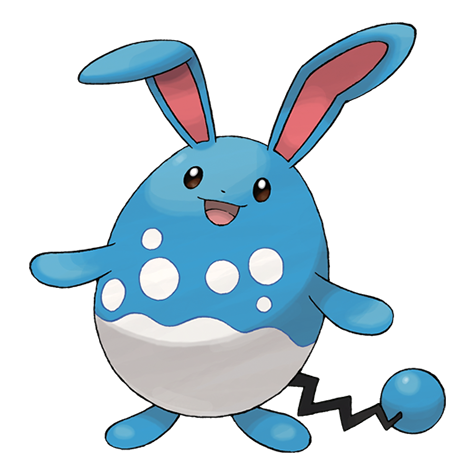 AzumarillHuge Power
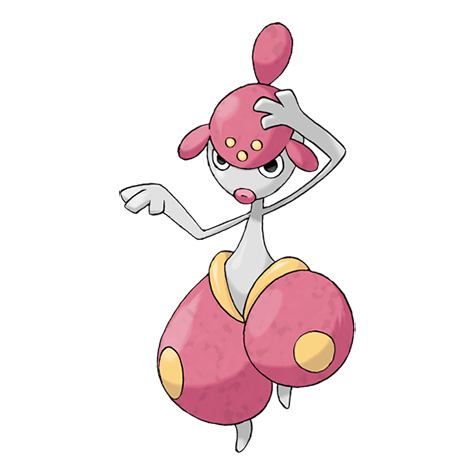 MedichamPure Power
Huge Power and Pure Power double the Attack stat. Azumarill with Huge Power hits harder than most dedicated physical attackers at roughly twice its listed Attack. This is the strongest flat damage multiplier in the game and the main reason Azumarill sees use despite its base 50 Attack.
Speed Boost (available on Blaziken and Sharpedo) adds one stage of Speed at the end of every turn. After a single turn on the field, these Pokémon outrun almost the entire unboosted metagame. Blaziken is banned to Ubers in Gen 9 specifically because Speed Boost plus its coverage has no clean answer in OU.
Unburden doubles Speed when the held item is used up or knocked off. Hawlucha with a White Herb and Swords Dance: use Swords Dance, White Herb cancels the Defense drop (or Attack drop from Intimidate), Unburden fires, and Hawlucha reaches the highest Speed tier in the unboosted game. One setup move wins.
Adaptability replaces the standard 1.5x same-type attack bonus with 2x. Porygon-Z with Adaptability and Nasty Plot becomes genuinely threatening in lower tiers despite its average base Speed, because its STAB Hyper Beam or Tri Attack hits at effectively double power.
Abilities for walls
Walls need to survive long enough to wear opponents down. The best wall abilities remove passive damage, reduce incoming hits, or recover HP without spending a turn.
Regenerator heals one third of maximum HP every time the Pokémon switches out. No move slot. No PP. No turn. Slowking-Galar and Amoonguss are nearly impossible to wear down through repeated attacks because every switch cycle partially resets their HP.
Magic Guard prevents all indirect damage: no Stealth Rock chip, no burn damage, no poison, no weather, no Life Orb recoil. Clefable with Magic Guard ignores the entire category of passive chip strategies. It can hold a Life Orb for free without losing HP on every attack.
Thick Fat halves damage from Fire and Ice moves. Snorlax and Munchlax with Thick Fat cover two of the most common coverage types in the game, giving them reliable defensive mixed bulk that their base stats alone would not suggest.
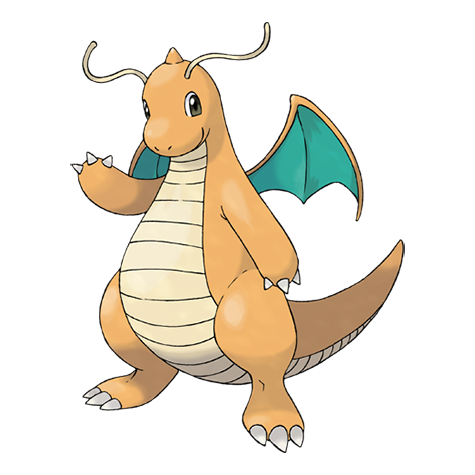 DragoniteMultiscale
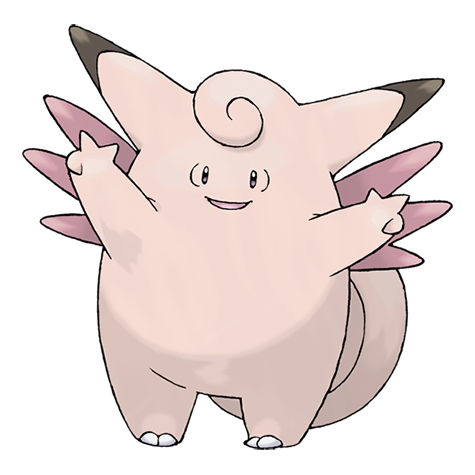 ClefableMagic Guard
Multiscale on Dragonite halves damage taken while at full HP. Pair it with Roost and Dragonite resets to full HP repeatedly, halving the next hit each time. This is what makes Dragonite a setup sweeper rather than just a fast attacker: it can survive a hit it has no business surviving, set up Dragon Dance, and sweep from there.
Abilities for pivots
Pivots need to come in safely and create free switch opportunities. The best pivot abilities either weaken the opponent on switch-in or expand the pivot's safe switch-in pool.
Intimidate drops the opposing Pokémon's Attack by one stage on switch-in. Incineroar is the most-used Intimidate pivot in both VGC and certain Singles formats. Every time it switches in, your opponent's physical attacker hits slightly less hard, buying you the turn you need to pivot out or set up.
Levitate gives full immunity to Ground-type moves. Most pivots with Levitate (Rotom-Wash, Gengar pre-Gen 6) can come in on Earthquake and Spikes without taking damage, which dramatically expands their safe switch-in opportunities.
Natural Cure heals status conditions on switch-out. Blissey and Starmie use Natural Cure to ignore Will-O-Wisp and Thunder Wave, two moves specifically designed to cripple defensive and pivot Pokémon. Switch out, status clears.
Volt Absorb and Water Absorb give full immunity to Electric and Water moves respectively, and heal 25% HP on hit. Toxapex with Regenerator (not Water Absorb, which it cannot have) is a separate case, but Vaporeon with Water Absorb can pivot into Water moves for free while recovering HP in the process.
Abilities for hazard setters
Hazard setters mainly need to survive long enough to set hazards. A few abilities also create hazards passively.
Toxic Debris on Glimmora sets a layer of Toxic Spikes when it takes a physical hit. This means that even if the opponent attacks Glimmora to prevent Stealth Rock, they may end up setting hazards for you instead. It is the strongest passive hazard ability currently in the game.
Sturdy guarantees survival from full HP against any attack that would otherwise OHKO. Skarmory sets Spikes even against Pokémon that would normally erase it in one hit. Custap Berry pairs with Sturdy on some leads: survive at 1 HP, then fire a priority Final Gambit before the opponent gets another turn.
Pressure doubles the PP cost of moves used against the Pokémon. On a wall designed to last thirty turns, Pressure can run the opponent out of PP on their strongest moves. Weavile uses Pressure offensively as a counter to stall. Giratina uses it to drain Rapid Spin PP from hazard removers.
Hidden abilities worth the extra effort
Hidden abilities require specific unlock methods (Raid dens, breeding, in-game events) but frequently define a Pokémon's viability in competitive play.
| Pokémon | Regular ability | Hidden ability | Why the HA wins | |---|---|---|---| | Clefable | Cute Charm | Magic Guard | Ignores all passive damage, enables Life Orb for free | | Dragonite | Inner Focus | Multiscale | Halves damage at full HP, enables setup | | Gliscor | Hyper Cutter | Poison Heal | Full recovery from toxic poison every four turns | | Venusaur | Overgrow | Chlorophyll | Doubles Speed in Sun, enabling a very different playstyle | | Blaziken | Blaze | Speed Boost | Makes it Ubers-tier; never use Blaze in competitive |
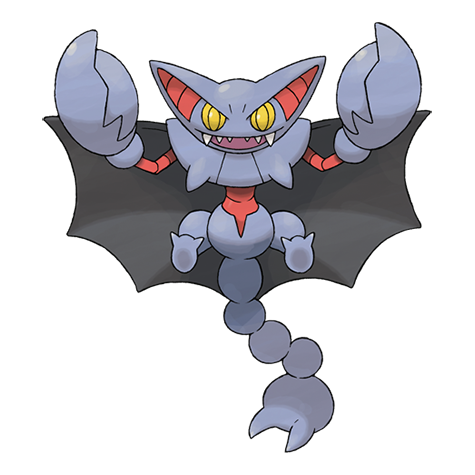 GliscorPoison Heal (HA)
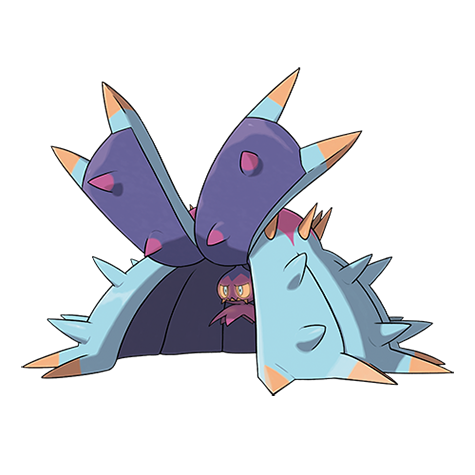 ToxapexRegenerator (HA)
Poison Heal on Gliscor is the standout case for walls. Toxic Orb activates, Gliscor gains 12.5% HP per turn instead of losing it, and becomes immune to all other status conditions. A Gliscor with Poison Heal and Roost is one of the most annoying walls to KO in the entire game.
Abilities that underperform
Wonder Guard (Shedinja only) sounds unbeatable until the opponent plays a priority move, a weather damage, a status condition, or a move that hits a type Shedinja does not fully resist. Shedinja has 1 HP and is not viable in any standard competitive format.
Stench gives a 10% flinch chance. In the same ability slot you could have Sheer Force (which boosts moves with secondary effects by 30%) or Poison Touch (which has a 30% chance to poison on contact). 10% flinch is not a real strategy.
Guts rewards a burned or paralyzed Pokémon with a 50% Attack boost. The problem: burn still halves your Attack before Guts kicks in, and paralysis cuts your Speed. Guts is niche on specific sets with Flame Orb (Ursaluna) where the self-inflicted status is part of the gameplan, not an accident.
Putting it together
When you are building in the Metamons team builder, look at the available abilities before finalizing any set. If the default ability does not actively support the role, check whether the hidden ability changes anything. The difference between a Clefable that ignores passive chip and one that relies on Eviolite-equivalent bulk to survive is not marginal. It changes how you play the entire game.
Next steps
Abilities directly interact with the role each slot fills. Pokemon team roles explained covers how to assign jobs to each of your six slots before you start selecting species. For Speed-related abilities like Speed Boost and Unburden, the speed tiers guide explains how to EV around them so you land in the right benchmark. If you're just getting into competitive Singles, Smogon tiers explained is the right starting point.
Building a team? The Metamons team builder walkthrough covers every feature, and the AI coach guide shows you how to check your ability choices against actual meta threats.