Pokemon Speed Tiers Guide: How Speed Wins and Loses Competitive Games
How speed tiers work in competitive Pokemon, which benchmarks matter in Gen 9 OU, and how to EV your team so the right Pokemon always moves first.
Competitive Pokémon builders & analysts
The Metamons team builds the competitive team-builder and Pokédex behind this site. Our guides explain competitive team-building concepts using referenced Smogon, Pokémon Showdown, and game-mechanics resources. Rulesets, available Pokémon, and usage trends change, so always confirm current legality in your chosen format.
- strategy
- speed
- ev-training
- singles
- ou
Speed in competitive Pokémon is not about raw numbers. It is about whether your Pokémon moves before the specific threats it needs to outspeed. Get this right and you pick up KOs you would otherwise miss. Get it wrong and you trade a winning position for a loss in a single turn.
What a speed tier actually is
A speed tier is the final Speed stat your Pokémon lands on, and whether that number sits above or below another Pokémon's Speed stat. The higher number moves first. That is it.
The formula behind the number:
(Base Speed × 2 + IVs + EVs/4) × Level/100 + 5, then multiplied by 1.1 for a positive nature or 0.9 for a negative one.
At level 100 with 31 IVs and 252 Speed EVs, a Timid or Jolly nature adds roughly 10% on top. You do not need to memorize this. What you need to know: positive Speed natures are almost always mandatory for sweepers, and the margin between two Pokémon at the same base Speed is often just one or two points.
The benchmarks that matter in Gen 9 OU
Instead of listing every Pokémon's Speed, focus on the clusters where most battles are decided.
 Flutter ManeBase 135 Speed
 Iron BundleBase 136 Speed
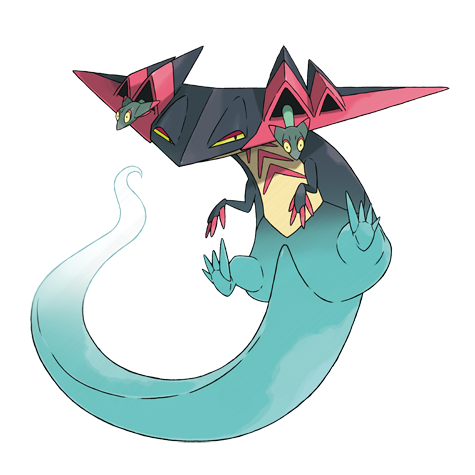 DragapultBase 142 Speed
The fast tier (base 130+): Flutter Mane sits at base 135. Iron Bundle at 136. Dragapult at 142. These Pokémon outrun almost everything without a Scarf or a speed boost. If your sweeper cannot reach this tier, it needs a different answer for Flutter Mane specifically, because it is the most common threat in this range.
The speed control tier (base 110-125): Weavile (125), Iron Valiant (116), Rillaboom (116). This is where Choice Scarf sets matter most. A Scarfed base 100 Pokémon reaches 492 Speed, comfortably above this cluster. A Scarfed Pokémon in this tier reaches the low 600s, outspeeding even Flutter Mane.
The mid tier (base 80-100): Gholdengo (84), Great Tusk (87), Kingambit (50 but irrelevant because Sucker Punch). This is the most populated range in OU and where speed ties happen constantly. A single EV point separates two Pokémon with the same base Speed.
The slow tier (base 50 and below): Trick Room specifically targets this range. Dondozo (35), Iron Hands (50), Ursaluna (50). Under Trick Room, the Pokémon with the lowest Speed stat moves first. Building a Trick Room team means deliberately minimizing Speed on your attackers.
The speed tie problem and how to solve it
When two Pokémon share the same base Speed and both run maximum Speed EVs with the same nature, they hit the same Speed stat. Each has a 50% chance to move first. In a tournament game, that coin flip can end your run.
The standard fix: run fewer Speed EVs on one of your Pokémon and accept the tie. Put those EVs into HP or Defense instead. If you win the tie, great. If you lose it, at least you are bulkier.
The other fix: find the exact Speed stat you need to clear the relevant threat, and stop there. If you need to outspeed base 110 Pokémon with a Scarf, calculate that number and invest exactly the EVs required. The rest go into your offensive or defensive stats.
Gholdengo mirrors are a common example. Both players often run Modest or Timid with 252 Speed. If you expect Gholdengo mirrors, drop to 4 Speed EVs and move the other 248 into HP. You lose the mirror speed tie but gain meaningful bulk against every other matchup.
Scarf, boosts, and priority
Choice Scarf multiplies Speed by 1.5. This is the most common speed control item in Singles and the main reason base 100 Pokémon see serious use as revenge killers. A Scarfed Landorus-Therian at base 91 Speed outspeeds everything below base 136 unboosted.
Speed-boosting moves: Dragon Dance adds one stage of Speed (50% boost). Agility and Rock Polish add two stages (doubles Speed). Quiver Dance adds one stage. After a single Dragon Dance, a Pokémon at base 100 Speed reaches above base 150 territory. After an Agility, it reaches above base 200.
Priority moves bypass the Speed comparison entirely.
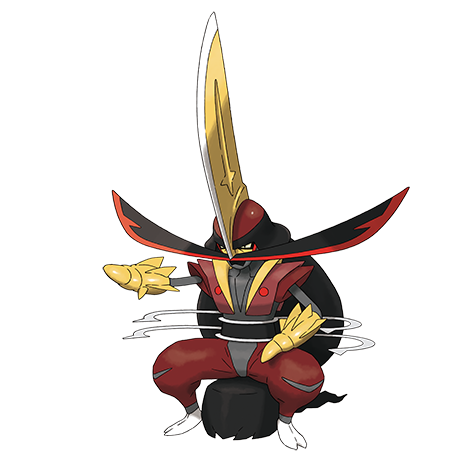 KingambitBase 50 Speed, uses Sucker Punch
 DragoniteExtreme Speed priority cleaner
Kingambit runs at base 50 Speed and does not care, because Sucker Punch always fires before non-priority moves. Dragonite runs Extreme Speed for the same reason. If your sweeper cannot outspeed a threat, priority is often the answer.
Tailwind doubles the Speed of your entire side for four turns. This is VGC's version of speed control: rather than individually EVing every Pokémon to outspeed threats, you set Tailwind and outrun everything for a critical window.
How to EV your team for speed
Before you finalize any EV spread, write down the five most common threats your team faces. For each one:
- Do you need to outspeed it, or can you take a hit and respond?
- What Speed stat does the common set actually run? (Smogon analyses list this.)
- Does this change under Tailwind, Trick Room, or a Scarf?
Then invest the minimum Speed EVs needed to clear each relevant benchmark. Anything left over goes into bulk or offense. Over-investing in Speed (252 EVs when 180 clears your benchmark) wastes EVs you could spend making your Pokémon harder to KO.
The Metamons team builder shows your Pokémon's final Speed stat live as you adjust EVs. Set the format to Gen 9 OU and compare your Speed directly against the benchmarks listed above.
Next steps
Speed tier decisions depend on knowing which role each Pokémon fills. A wall does not need to outspeed anything. A sweeper needs to outspeed its revenge killers. Start with pokemon team roles explained if you haven't assigned jobs to each slot yet. For the broader Gen 9 landscape and which Pokémon are setting these benchmarks, the Gen 9 OU tier list is the current snapshot. If you're building for VGC with Tailwind and Trick Room in the mix, how to build a VGC team covers speed control for doubles.
For an automated speed tier check, run your team through the AI team rater — it compares your EVs against the current meta's benchmarks and flags the matchups you lose by one or two points.