#0984
— Paradox Pokémon
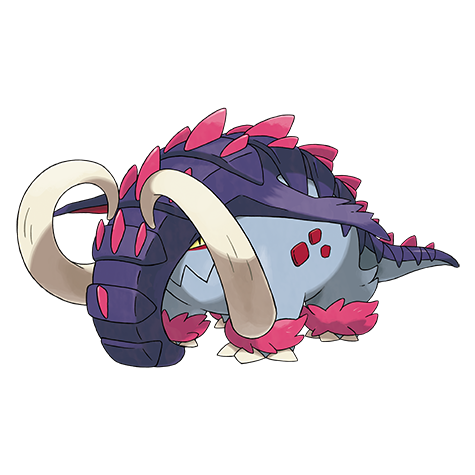
Great Tusk
Abilities
MetaMons competitive notes
Great Tusk is a ground/fighting-type Pokémon whose base stats lean toward Attack — at 570 BST it is a strong total for competitive play, with above-average speed (base 87) and a physical attacking profile. Its Protosynthesis ability matters more than the raw numbers when it hits the field: check what it does before deciding between a sweeper, pivot, or support role for Great Tusk. Build around what Great Tusk actually threatens, not its in-game lore — start from its weaknesses and strongest STAB moves, then decide whether its Speed, bulk, or coverage justifies a team slot.
Reviewed competitive profile
Reviewed by Metamons Team
Great Tusk compresses hazard removal, Knock Off support, and physical Ground pressure into one slot. Its value comes from choosing which of those jobs matters in the current matchup instead of asking one set to perform all of them indefinitely.
Gen 9 OU: This profile treats Great Tusk as an OU utility attacker, not a universal answer to every hazard matchup.
Rapid Spin removes hazards while improving Speed, allowing Great Tusk to convert a utility turn into momentum.
Knock Off makes repeated switches harder and creates progress against targets that can absorb its STAB attacks.
Starting blueprint
This is an explained starting point, not a claim that one set fits every matchup. Compare it with the live format presets in the team builder.
- Item
- Heavy-Duty Boots
- Ability
- Protosynthesis
- Nature
- Jolly
- Tera type
- Steel
EV approach
Prioritize Attack and the Speed benchmark your team needs. Add bulk only when the set is expected to switch into physical attacks repeatedly.
Moves and jobs
Headlong Rush
Maximum immediate Ground-type pressure.
Close Combat
Second STAB for Dark-, Steel-, and Normal-types.
Rapid Spin
Removes hazards while raising Speed for the next exchange.
Knock Off
Punishes Ghost switch-ins and strips recovery items.
Do not expose Great Tusk to every special attacker simply because the team needs removal. Use Knock Off early to reveal and weaken the opponent's answers, then choose a Rapid Spin turn after Ghost-types or punishing special attackers have been forced out. If Great Tusk is the only check to a physical win condition, preserve its HP and accept that hazards may remain for several turns.
Checks to plan for
- Dragapult — threatens from the special side and blocks unplanned Rapid Spin.
- Corviknight — ignores Ground STAB and can pivot around predictable attacks.
- Iron Valiant — forces it out with strong special Fairy pressure.
Partners that solve a job
- Kingambit — pressures Ghost-types that interfere with Rapid Spin.
- Gholdengo — forms an aggressive hazard-control core.
- Raging Bolt — absorbs several special attacks Great Tusk should avoid.
- Using Rapid Spin into an obvious Ghost switch.
- Assuming physical bulk compensates for weak special matchups.
- Dropping Knock Off when the team has no other way to remove items.
Damage multipliers when attacked by each type
A MetaMons teambuilding read based on base stats and typing
Great Tusk takes super-effective damage from Water, Grass, Ice, Flying, Psychic, Fairy moves — every one of those types is a check you need an answer for when drafting. Before locking Great Tusk into a team, check the weakness guide and count how many of those types your remaining five slots can answer.
- Highest stat
- Attack (131)
- Lowest stat
- Special Attack (53)
- Offensive lean
- physical
- Speed tier
- above-average speed (base 87)
- BST
- 570 (strong for the format)
Compare this Pokémon against your roster’s shared weaknesses in the MetaMons team builder, where the 18-type coverage heatmap reads the whole team, not one slot.
About Great Tusk
Great Tusk is the Paradox Pokémon a Ground/Fighting type Pokémon. It has a base stat total of 570 with Protosynthesis as its ability.
What is Great Tusk weak to?
Great Tusk is a Ground/Fighting-type, so it takes super-effective damage from Water, Grass, Ice, Flying, Psychic, Fairy. It resists Rock, Poison, Bug, Dark. It is immune to Electric.
How to counter Great Tusk
To counter Great Tusk in competitive play, bring Pokémon that can hit back with Water or Grass or Ice or Flying or Psychic or Fairy moves and can withstand its Ground/Fighting STAB attacks. Check the type-defense grid above for the full multiplier breakdown.
Using Great Tusk in competitive teams
Great Tusk may be available in some Smogon or VGC formats, depending on the generation and active rules. The builder can help explore sets, but it does not validate every species banlist or event regulation. Build a competitive team with Great Tusk on Metamons and get AI reads on your type coverage and threats before you queue.